
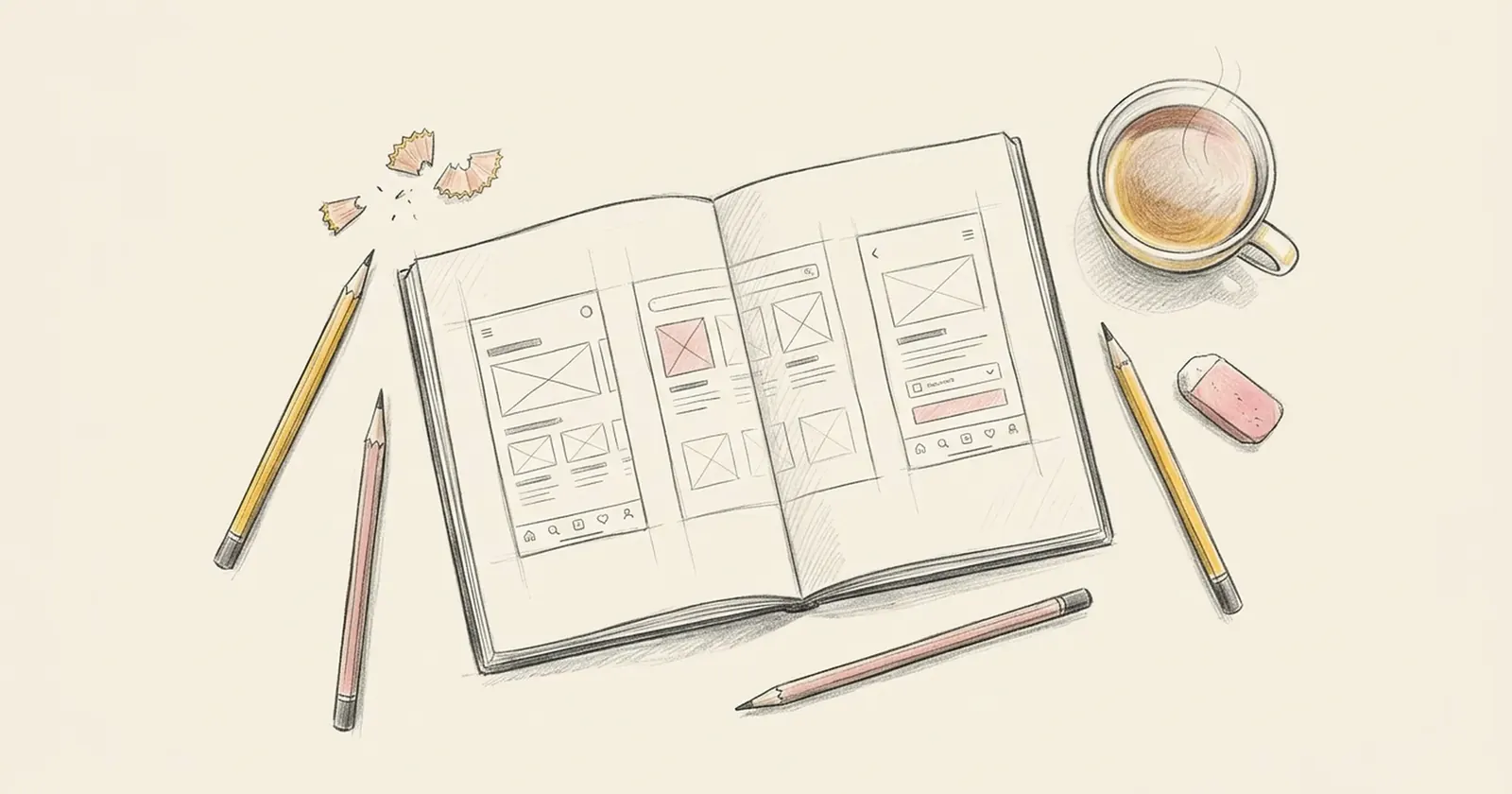
The blank sheet
Every project we take on starts the same way: a pencil, a sheet of paper and a question. Not “what should this look like?” but “what does this need to do for the person using it?”
It is tempting to skip this. Templates are a click away, and they look finished on day one. But a template is an answer to someone else’s problem. The moment you pick one, you inherit its assumptions about your customers, your content and your voice.
Most use templates. We draw from scratch, because the first lines decide everything that follows.
Sketches are cheap. Code is not.
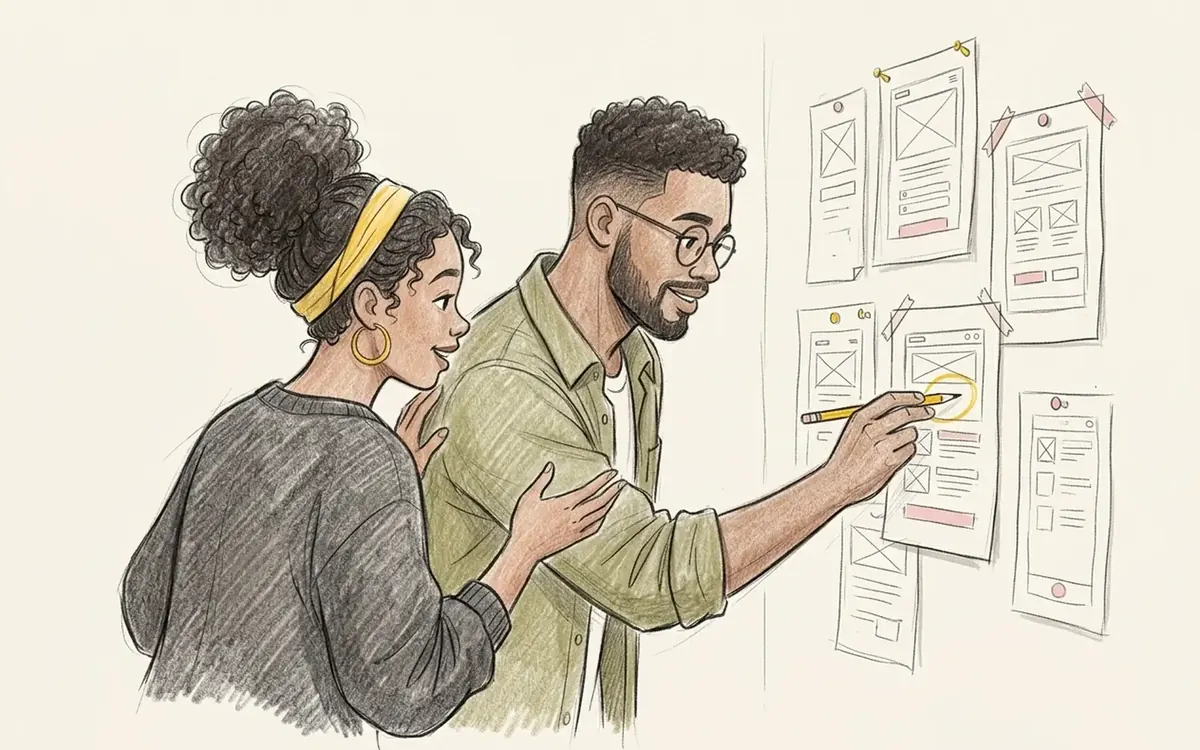
A sketch costs a minute. Rebuilding a screen after launch costs weeks. Drawing first lets us make our mistakes where they are cheapest: on paper, in front of you, before anything is built.
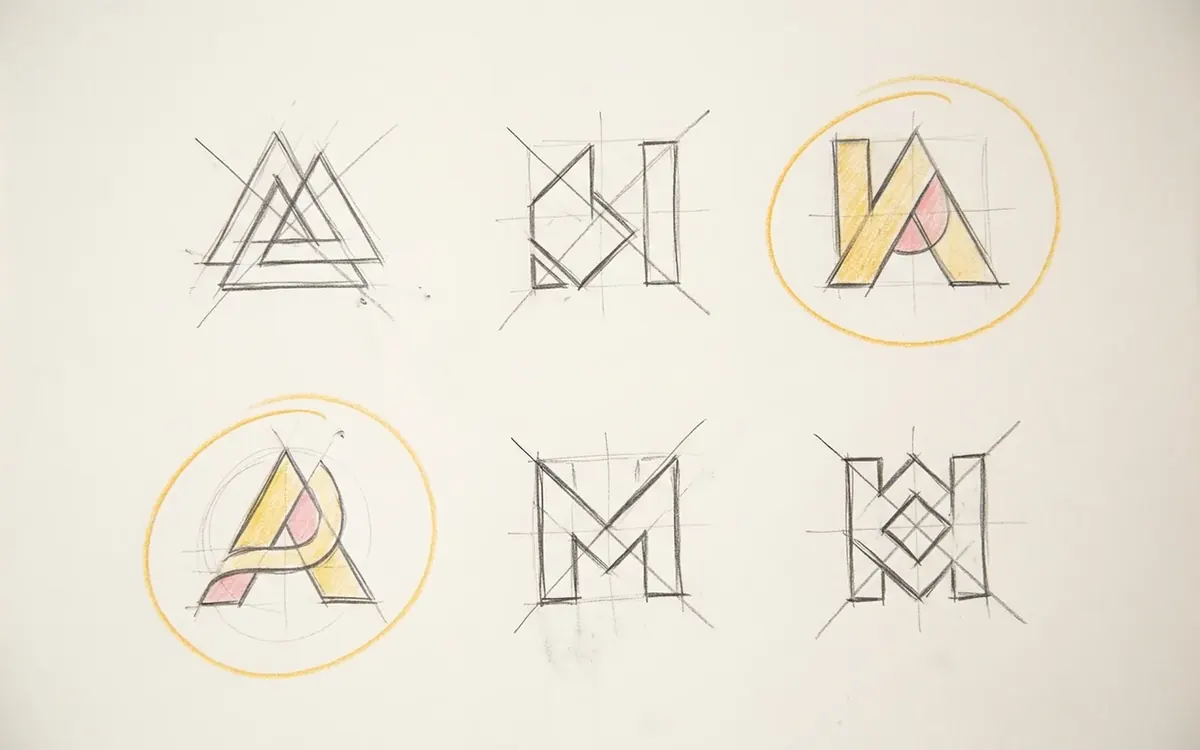
We usually sketch several rough routes for a brand before we open any design software. Most are thrown away on purpose. The one that survives has earned its place.
Five decisions
We think of every project as a drawing that passes through five decisions:
- Sketch: map the problem, keep options open.
- Outline: agree the structure and journeys.
- Detail: type, words, interactions, accessibility.
- Ink: build it in working code and test it.
- Sign: correct what needs revision, then launch.
Before and after
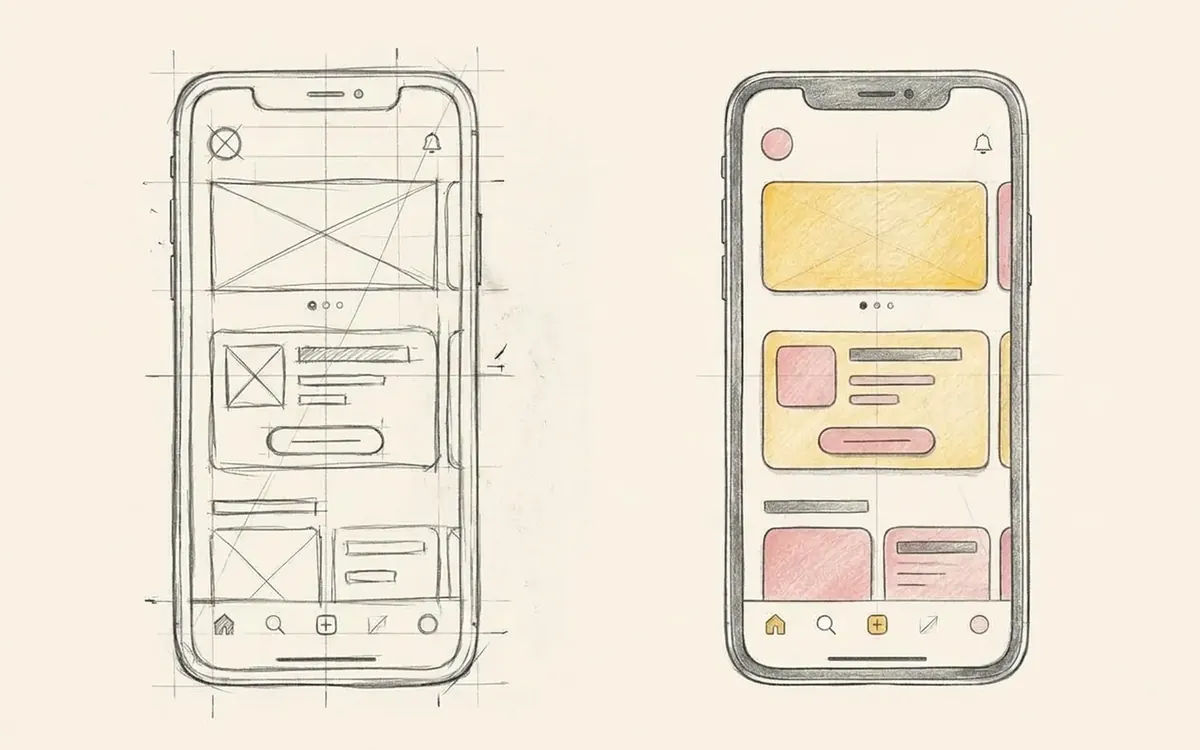
Drag the handle to see a drawing move from a loose sketch to the finished piece. The composition barely changes. What changes is confidence.
 SketchSigned
Try it yourself
Next time you plan a website or a brand, put the laptop away for ten minutes. Draw the one screen your customer must not misunderstand. Then draw it again. You will be surprised how much you already know.
And if you want a hand with the second drawing, we are a message away.